

Do WPC doors in the bathroom have good sound insulation?
Oct 03, 2025
Leave a message
As a supplier of WPC Door for Bathroom, I often get asked about the sound - insulation properties of these doors in bathroom settings. In this blog, I'll delve into the science behind sound insulation, how WPC doors measure up, and whether they are a good choice for your bathroom in terms of keeping noise in or out.
Understanding Sound Insulation
Before we assess the sound - insulation capabilities of WPC doors, it's crucial to understand the basic principles of sound insulation. Sound is a form of energy that travels through the air in waves. When these waves encounter a barrier, such as a door, several things can happen. The sound can be reflected off the surface of the door, absorbed by the material of the door, or transmitted through the door.
The effectiveness of sound insulation is measured in decibels (dB). A higher dB rating indicates better sound insulation. For example, a quiet library might have a background noise level of around 30 - 40 dB, while a busy street could reach 70 - 80 dB. In a bathroom, the main sources of noise are running water, flushing toilets, and sometimes people talking or singing.
What are WPC Doors?
WPC stands for Wood - Plastic Composite. These doors are made by combining wood fibers or flour with thermoplastics, along with other additives. The result is a material that has some of the benefits of both wood and plastic. WPC doors are known for their durability, moisture resistance, and relatively low cost compared to solid wood doors. They are also available in a variety of styles, including WPC Laminate Door and WPC Interior Door, making them a popular choice for bathrooms.
Factors Affecting Sound Insulation of WPC Doors in Bathrooms
Material Composition
The combination of wood and plastic in WPC doors plays a significant role in their sound - insulation properties. Wood fibers have some natural sound - absorbing qualities. They can break up sound waves and convert some of the sound energy into heat energy. On the other hand, plastic components can add to the density of the door, which is also important for sound insulation. A denser material is generally better at blocking sound waves from passing through.
Door Thickness
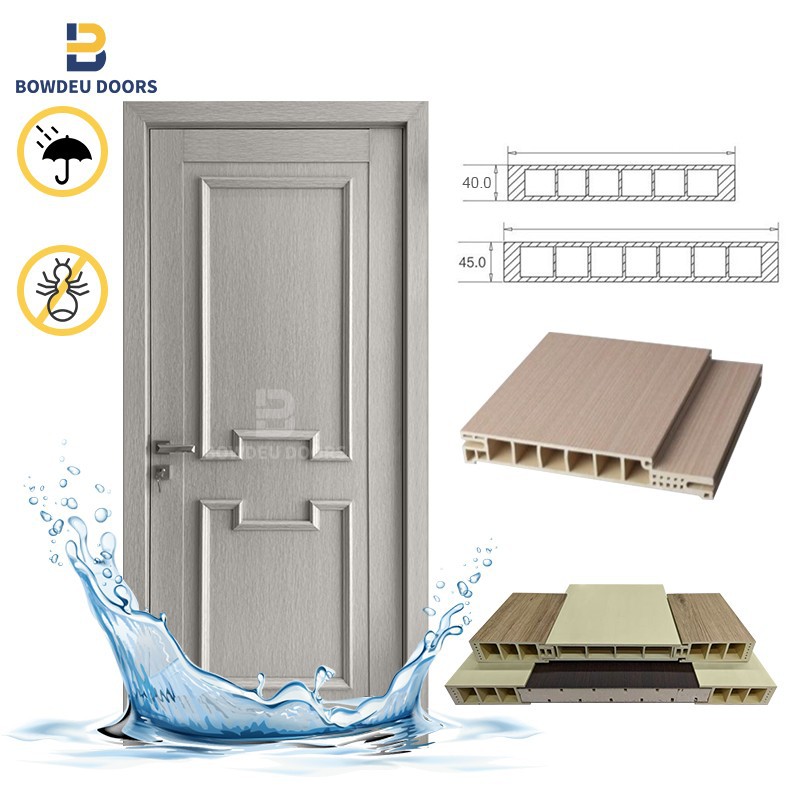
Thicker doors tend to have better sound - insulation capabilities. A standard WPC door for a bathroom might have a thickness of around 35 - 40 mm. This thickness provides a certain level of resistance to sound transmission. However, if you are looking for maximum sound insulation, you might consider a thicker WPC door, which can be specially ordered.
Sealing
Proper sealing is essential for any door to achieve good sound insulation. In a bathroom, a well - sealed WPC door can prevent sound from leaking out through the gaps around the edges. Most WPC doors come with weatherstripping or other sealing mechanisms that can help reduce sound leakage. However, it's important to ensure that the sealing is in good condition and properly installed.
Installation Quality
Even the best - designed WPC door will not provide good sound insulation if it is not installed correctly. A poorly installed door may have gaps or uneven surfaces that allow sound to pass through. It's crucial to hire a professional installer who has experience with WPC doors to ensure a proper fit and installation.
How Do WPC Doors Compare to Other Door Materials?
Solid Wood Doors
Solid wood doors are often considered to have good sound - insulation properties. They are dense and have a natural ability to absorb and block sound. However, solid wood doors can be more expensive and are more susceptible to moisture damage in a bathroom environment. WPC doors, on the other hand, offer a more cost - effective and moisture - resistant alternative, although they may not provide the same level of sound insulation as high - quality solid wood doors.
Hollow Core Doors
Hollow core doors are generally the worst option for sound insulation. They are lightweight and have a large air cavity inside, which allows sound to pass through easily. WPC doors, with their solid composite structure, are a much better choice in terms of sound insulation compared to hollow core doors.
Measuring the Sound Insulation of WPC Doors
To determine the actual sound - insulation performance of WPC doors, laboratory tests are often conducted. These tests measure the Sound Transmission Class (STC) rating of the door. The STC rating is a single - number index that represents the ability of a partition (in this case, a door) to reduce sound transmission. A higher STC rating means better sound insulation.

Most WPC doors for bathrooms have an STC rating in the range of 25 - 35 dB. This rating is sufficient for normal bathroom use, such as reducing the sound of running water and toilet flushing. However, if you are in a situation where you need to block out more intense sounds, such as loud music from an adjacent room, you might need a door with a higher STC rating.
Practical Applications in Bathrooms
In a typical home bathroom, a WPC door with an average STC rating can provide a reasonable level of sound insulation. It can help keep the sound of running water and other bathroom noises from disturbing the rest of the house. For example, if you have a bathroom next to a bedroom, a WPC door can help create a more peaceful sleeping environment.
In commercial settings, such as hotels or office buildings, the requirements for sound insulation may be higher. In these cases, it might be necessary to choose a WPC door with a higher STC rating or to use additional sound - proofing measures in combination with the door.
Conclusion
In conclusion, WPC doors in the bathroom can have good sound - insulation properties, especially when considering their cost, durability, and moisture resistance. While they may not offer the same level of sound insulation as some high - end solid wood doors, they are a practical and effective solution for most residential and many commercial bathroom applications.
If you are interested in purchasing WPC Door for Bathroom and want to discuss the sound - insulation requirements for your specific project, please feel free to contact us. We are here to help you choose the right door for your needs and ensure that you get the best possible sound - insulation performance.
References
- Building Acoustics: Principles and Practice by Colin H. Hansen and Evandro L. Marcolini
- Handbook of Noise and Vibration Control by Cyril M. Harris